
How to Fix APK Installation Errors (Complete Guide)
Description
APK files, also known as Android Package Kit files, are used to install applications and games on Android devices. They contain the necessary components required for an application to work correctly on a smartphone or tablet. Many Android users install APK files for different applications, but installation problems can sometimes occur during the process.
How to Fix APK Installation Errors is a common topic among Android users because installation issues can happen for several reasons. Problems such as incompatible Android versions, insufficient storage space, damaged APK files, disabled installation permissions, or parsing errors may prevent applications from installing properly. These issues can affect users across different Android devices and versions.
In this guide, readers will learn about the most common causes of APK installation problems and practical solutions that may help resolve them. We will also cover troubleshooting methods, useful tips, and steps that can help improve the APK installation experience on Android devices.
Many Android users face installation issues while downloading gaming applications and APK files. If you are searching for popular apps, you can also explore our Best APK Games in Pakistan 2026 guide
What Are APK Installation Errors?
APK installation errors are problems that occur when an Android device cannot successfully install an APK file. These errors can prevent applications from downloading, opening, or completing the installation process correctly. APK files contain the required components for Android applications, but various issues can interrupt the process and stop users from installing an app on their devices.
Android systems include built-in security measures designed to protect devices and user information. Understanding How to Fix APK Installation Errors is useful because Android may block certain installations if an application appears suspicious, incompatible, or does not meet installation requirements. Security settings, app permissions, and device restrictions can sometimes prevent APK files from being installed successfully, making it important for users to review device settings before installation.
APK installation problems can affect users in different ways. Some users may receive error messages during installation, while others may experience failed installations, app crashes, or incomplete downloads. Understanding How to Fix APK Installation Errors is important because these issues can create frustration, especially when users are trying to install important Android applications. Identifying the causes of installation problems is useful because it helps users recognize potential issues and apply the correct solutions for a smoother installation experience.
Why Do APK Errors Occur?
Several factors can cause APK installation problems on Android devices. Below are some common reasons:
Damaged APK Files
Incomplete or corrupted APK files may stop applications from installing properly. Interrupted downloads can sometimes create damaged files.
Security Restrictions
Android devices may block applications from unknown or untrusted sources because of security settings.
Compatibility Issues
Some APK files require specific Android versions or device specifications to function correctly.
Device Storage Problems
Insufficient storage space can prevent applications from completing the installation process successfully.
Common APK Installation Error Messages and Their Meaning
Android users may encounter different error messages while installing APK files on their devices. These messages usually appear when the system detects an issue related to compatibility, permissions, storage, or application files. Understanding How to Fix APK Installation Errors can help users identify these problems more quickly and apply the correct troubleshooting methods. Learning about common APK installation errors also helps users improve the overall installation experience on Android devices.
If you experience setup problems, our guide covering common 3S Game APK installation issues provides troubleshooting steps and solutions.
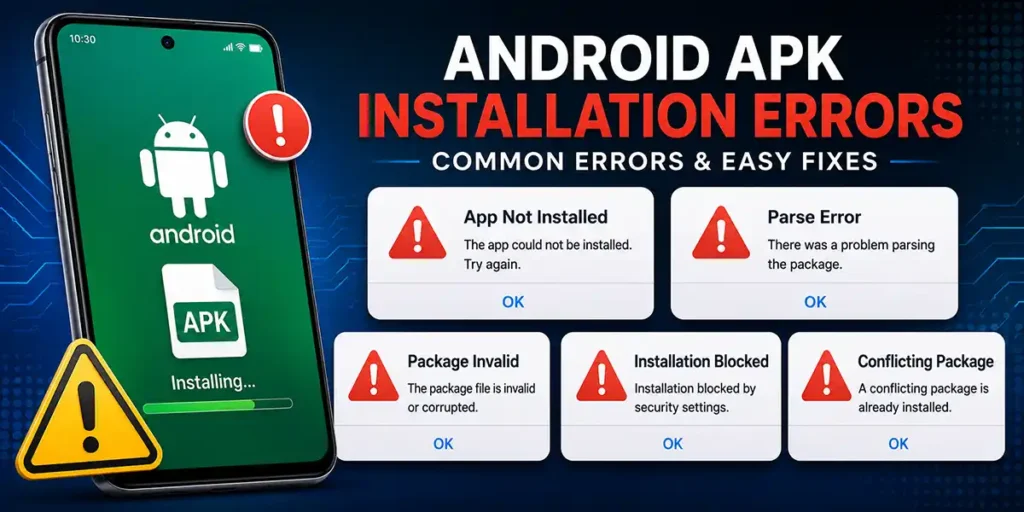
App Not Installed
The App Not Installed message is one of the most common APK installation errors on Android devices. This usually happens when the APK file is incompatible with the Android version, the application already exists on the device, or installation permissions are restricted.
Parse Error
A Parse Error generally appears when Android cannot properly read or process the APK file. This may occur if the APK file is incomplete, corrupted during download, or designed for a different Android version.
Package Invalid Error
The Package Invalid Error indicates that the Android system detected an issue with the APK package itself. The file may be damaged, modified, or incorrectly packaged, preventing successful installation.
Installation Blocked Error
An Installation Blocked Error usually appears because Android security settings prevent applications from being installed from unknown sources. Users may need to review device security settings before attempting installation again.
Conflicting Package Error
A Conflicting Package Error can happen when an application with the same package name already exists on the device. Different application versions or conflicting files can prevent the new APK from installing properly.
Recognizing these messages can help users understand the source of the problem and make troubleshooting APK installation issues easier.
Check Available Storage Space on Your Device
Insufficient storage space is one of the most common reasons APK installation problems occur on Android devices. Applications require enough free space not only for installation but also for temporary files and additional resources used during the setup process. If a device has limited storage, Android may stop the installation process and display an error message. Understanding how storage affects installation can help users when learning How to Fix APK Installation Errors on Android devices.
Checking available storage space is a simple process and can help identify whether storage limitations are causing the issue.
Steps to Check Storage Space
Step 1: Open Settings
Open the Settings application on your Android device.
Step 2: Go to Storage
Scroll through the settings menu and tap Storage or Device Storage, depending on your smartphone model.
Step 3: Remove Unnecessary Files
Review files stored on your device and remove items that are no longer needed. Large files and unused content can reduce available space.
Step 4: Clear Cache
Open application settings and clear cached data to free additional storage space.
Useful Tips
- Delete duplicate photos and videos that take up unnecessary space
- Remove unused applications that are no longer needed
- Move media files to cloud storage if available
- Regularly review device storage usage
Managing storage properly can improve device performance and reduce APK installation issues.
Enable Unknown Sources Permission
Android devices include built-in security features designed to protect users from potentially unsafe applications. For this reason, Android may block installation attempts from sources outside standard app stores. This restriction helps prevent suspicious or unauthorized applications from being installed automatically. However, when users download APK files manually, they may need to enable installation permissions before completing the process. Understanding these settings is useful when learning How to Fix APK Installation Errors because blocked permissions can stop an APK file from installing successfully.
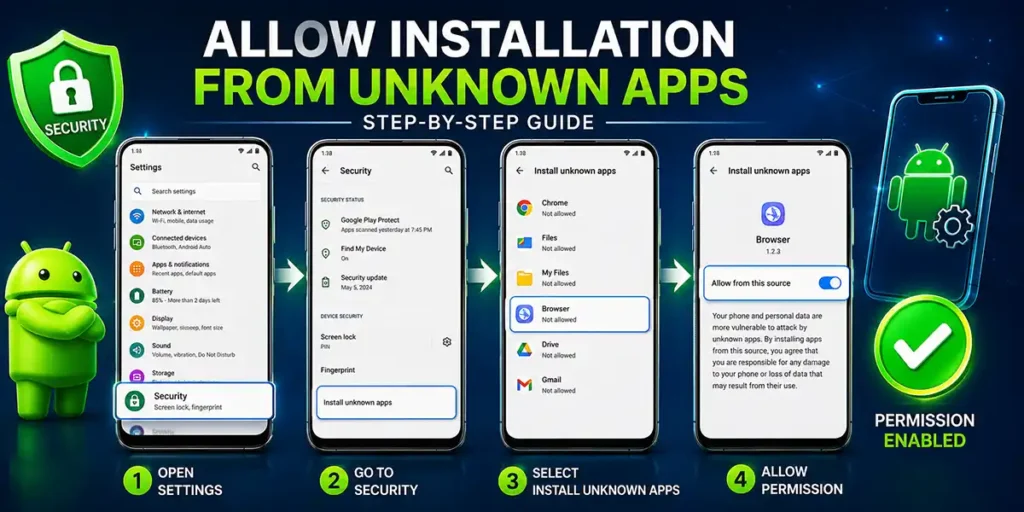
Steps to Enable Unknown Sources Permission
Step 1: Open Settings
Open the Settings application on your Android device.
Step 2: Select Security
Scroll down and locate Security, Privacy, or Apps & Notifications, depending on your Android version and device model.
Step 3: Tap Install Unknown Apps
Find and select Install Unknown Apps from the settings menu.
Step 4: Allow Permission
Choose the browser or file manager application you used to download the APK file and enable installation permission.
Safety Note
Users should only enable installation permissions for trusted applications and reliable sources. Enabling unknown app installation for untrusted files may increase security risks. After successfully installing the application, users may also disable this permission if they do not need it regularly.
If you are not familiar with installation settings, read our complete How to Install APK Files on Android 2026 guide
Download APK Files From Trusted Sources
Downloading APK files from trusted sources is an important step when learning How to Fix APK Installation Errors on Android devices. Many installation issues occur because users download files from random or unreliable websites. Unknown websites may provide incomplete, modified, or outdated APK files that can create installation problems and affect device performance.
Corrupted APK files are one of the most common reasons applications fail to install correctly. If a download process is interrupted or a file has been altered, Android may display installation errors such as App Not Installed, Parse Error, or Package Invalid Error. In some situations, damaged files may also prevent applications from opening after installation.
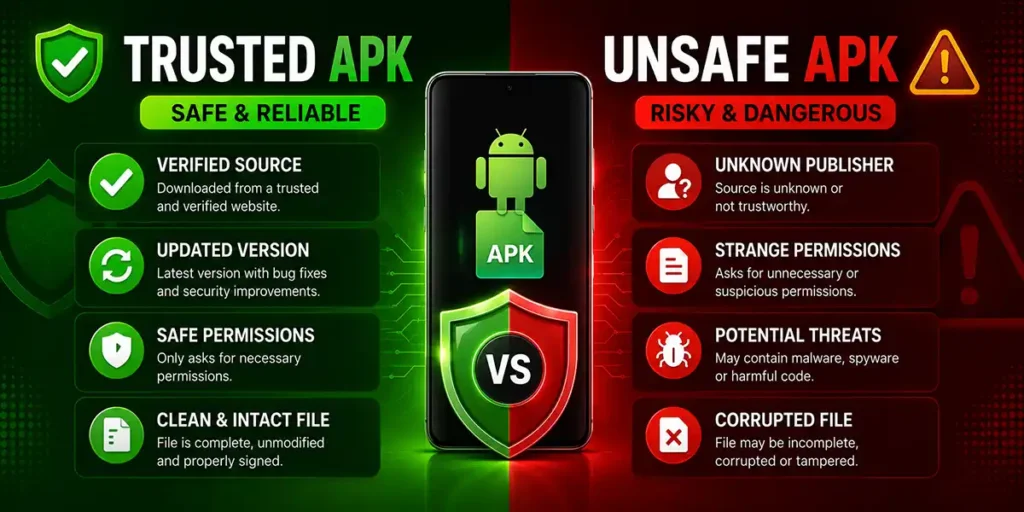
Using updated APK versions is equally important. Understanding How to Fix APK Installation Errors also includes checking whether the application version matches your Android device requirements. Older application versions may not support newer Android systems, while outdated files can create compatibility issues during installation. Downloading the latest available version can help improve application performance and reduce installation errors.
Signs of Unsafe APK Files
Users should carefully review APK files before downloading and installing them.
Unusual Permissions
Applications requesting unrelated permissions, such as access to contacts or messages without a clear reason, may require extra caution.
Very Small File Size
An APK file that appears unusually small compared to the expected application size may indicate an incomplete or damaged download.
Unknown Publisher
Applications without recognizable information or publisher details may require additional verification before installation.
Downloading files from reliable sources and reviewing application details can help reduce APK installation issues and improve overall device security.
Before downloading any file, follow our APK Safety Guide for Android Users to avoid suspicious APK files.
Fix Android Version and Device Compatibility Issues
Device compatibility issues are another common reason APK files fail to install on Android smartphones. Some applications are designed for specific Android versions, device specifications, and hardware requirements. When a device does not meet these requirements, users may experience installation errors or application problems. Understanding compatibility settings can help users when learning How to Fix APK Installation Errors more effectively.
Android Version Compatibility
Android applications often require specific operating system versions to function correctly. Older Android devices may not support applications developed for newer Android releases. Understanding How to Fix APK Installation Errors is important because compatibility issues are a common reason for failed installations. If an APK file requires a newer system version than the one installed on the device, Android may block installation or display an error message.
Users can check their Android version by:
- Opening Settings
- Selecting About Phone
- Viewing the Android Version information
Keeping Android software updated can improve compatibility and reduce installation issues.
CPU Architecture Problems
Some APK files are developed for specific processor architectures. Installing the wrong version can create compatibility problems and prevent successful installation.
Common CPU architectures include:
ARM – Commonly used in many Android smartphones and tablets
ARM64 – Supports 64-bit Android devices and newer applications
x86 – Usually found on certain Android devices and emulators
Users should verify their device architecture before downloading APK files.
App Requirements
Applications may also include specific installation requirements such as minimum Android versions, storage needs, and hardware compatibility. Understanding How to Fix APK Installation Errors becomes easier when users review these requirements before downloading an application. Checking application details in advance can help users avoid installation problems, reduce compatibility issues, and improve overall device performance.
Remove Existing Versions of the App
Existing versions of an application can sometimes prevent a new APK file from installing correctly. Android devices may detect package conflicts when a similar application already exists on the device. This issue commonly occurs when users attempt to install a different version of an app or download an APK file from another source. Learning this method can help users understand How to Fix APK Installation Errors caused by package conflicts and installation failures.
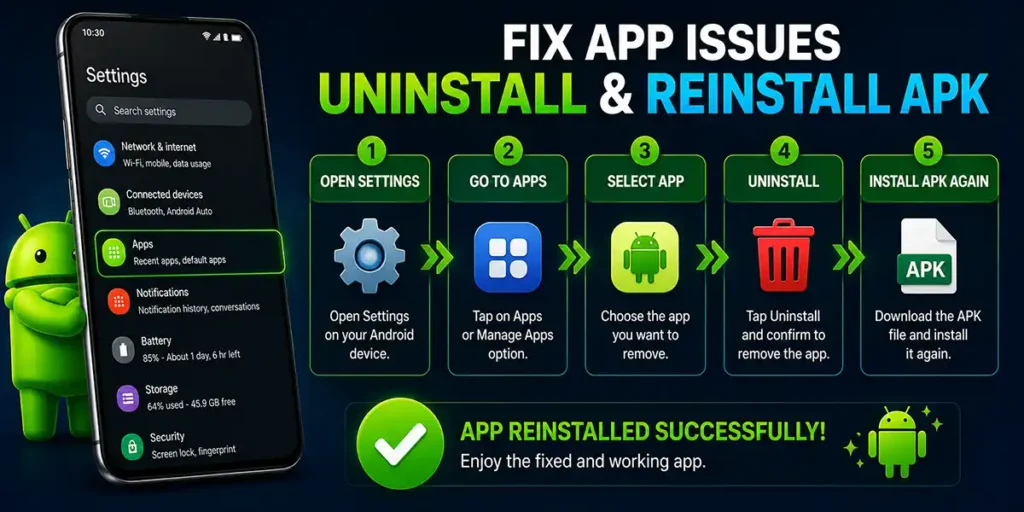
Signature mismatch issues are another common problem. Every application contains a digital signature used by Android for verification purposes. If a newly downloaded APK file has a different signature from the version already installed on the device, Android may block the installation process and display an error message.
Steps to Remove Existing App Versions
Step 1: Open Settings
Open the Settings application on your Android device.
Step 2: Go to Apps
Scroll through the settings menu and select Apps or Application Manager.
Step 3: Select the App
Locate the application causing the installation conflict and tap it.
Step 4: Uninstall the App
Press Uninstall and remove the existing version from your device.
Step 5: Retry Installation
After removing the old application, install the APK file again and check whether the issue has been resolved.
Removing conflicting app versions can help reduce installation errors and improve compatibility during APK installation.
Advanced Methods to Fix APK Installation Problems
If common troubleshooting methods do not resolve installation issues, users can try a few advanced techniques. Some APK problems may occur because of temporary system files, outdated Android software, or settings conflicts. These methods can help users understand How to Fix APK Installation Errors more effectively when standard solutions fail.
Clear Package Installer Cache
The Android Package Installer manages application installations on the device. Temporary files stored by this service can occasionally become outdated or corrupted, which may create installation problems.
Steps:
- Open Settings
- Tap Apps or Application Manager
- Select Show System Apps if necessary
- Locate Package Installer
- Tap Storage
- Select Clear Cache
Clearing the cache can remove temporary data that may interfere with APK installation.
Restart Your Device
Restarting a smartphone is a simple method that can resolve temporary software issues and background process conflicts.
Steps:
- Press and hold the Power Button
- Select Restart
- Wait for the device to restart completely
- Retry APK installation
Restarting refreshes system processes and may help remove temporary errors.
Update Android Software
Outdated Android versions can sometimes create compatibility problems with newer applications.
Steps:
- Open Settings
- Tap Software Update
- Select Check for Updates
- Install available updates
- Restart the device
Updating Android can improve security, stability, and application compatibility.
Reset App Preferences
Incorrect application settings can occasionally affect installations. Resetting app preferences restores default settings without removing personal data.
Steps:
- Open Settings
- Go to Apps
- Tap the three-dot menu
- Select Reset App Preferences
- Confirm the action
This method may help restore settings that are preventing successful APK installations.
APK Installation Troubleshooting Checklist
Before attempting to install an APK file again, users can quickly review a few important checks to identify possible issues. Following this checklist can help reduce common installation problems and improve the chances of a successful installation. Understanding these points is also useful when learning How to Fix APK Installation Errors on Android devices.
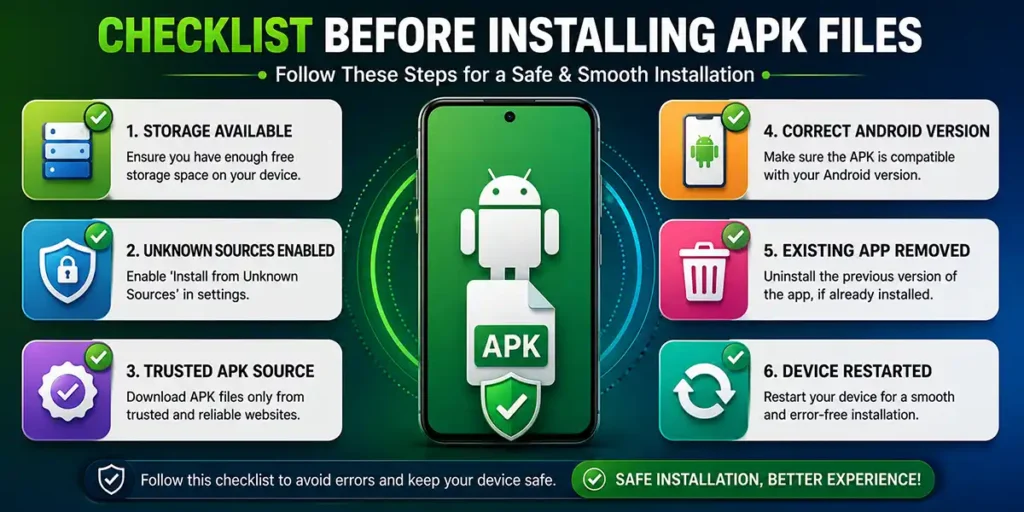
✓ Sufficient storage space is available on the device
✓ Unknown Sources or installation permissions are enabled
✓ APK file was downloaded from a trusted source
✓ Android version matches application requirements
✓ Existing application versions have been removed
✓ Device has been restarted before retrying installation
Reviewing this troubleshooting checklist can help users identify installation problems faster and create a smoother APK installation experience.
Frequently Asked Questions (FAQ)
Why does my APK say “App not installed”?
The “App not installed” message can appear for several reasons. Common causes include insufficient storage space, incompatible Android versions, disabled installation permissions, or conflicting application packages already installed on the device. Users should also verify that the APK file was downloaded completely and from a trusted source.
How do I fix APK parse errors?
APK parse errors usually occur when Android cannot read the application package correctly. Users can try downloading the APK file again, checking Android compatibility, enabling installation permissions, and verifying that the file is not damaged or incomplete. Users can also review Android support information for additional guidance related to application compatibility and Android settings.
Can APK files damage my phone?
APK files themselves do not automatically damage a phone. However, downloading applications from untrusted sources may create security risks. Modified or suspicious APK files may affect device performance, privacy, or application behavior. Users should always install APK files from reliable sources.
Why won’t Android install APK files?
Android devices may block APK installation because of storage limitations, security restrictions, package conflicts, incompatible Android versions, or disabled permissions. Reviewing device settings and installation requirements may help resolve the issue.
Are APK files safe?
APK files can be safe when downloaded from trusted sources and reviewed carefully before installation. Users should check application permissions, verify file information, and keep Android devices updated to improve overall security.
Conclusion
APK installation problems can occur for many different reasons, but most issues can be resolved by following the correct troubleshooting steps. In this guide, we explored several common solutions, including checking available storage space, enabling installation permissions, downloading APK files from trusted sources, reviewing Android compatibility, removing conflicting app versions, and using advanced troubleshooting methods. These steps can help users identify and solve many common installation problems on Android devices.
Understanding How to Fix APK Installation Errors can make the installation process easier and help users avoid repeated issues in the future. Downloading APK files from trusted and reliable sources is important because damaged or outdated files may create compatibility and security problems.
Users should also follow good safety practices before installing applications. Reviewing permissions, keeping Android devices updated, and checking file details can improve both device security and performance. By following these recommendations, Android users can create a safer and smoother APK installation experience.
If you want to discover more Android game applications after fixing installation problems, explore our Best APK Games in Pakistan 2026 collection.